Featured Concrete pros
Top rated Claimed pros on Main Street. Enter your ZIP to see pros near you.
How Main Street works
1. Describe your project
Tell us what you need and where the job is.
2. Get project estimates
Reach local asphalt companies and compare your options.
3. Compare and hire
Review profiles, then hire the pro that fits your job.
Concrete by state
Concrete pros on Main Street
Updated
- 290 listed contractors list concrete
- 1 Claimed
Concrete by city
Concrete in Glendale, AZConcrete in Anaheim, CAConcrete in Chico, CAConcrete in Corona, CAConcrete in Hayward, CAConcrete in Huntington Beach, CAConcrete in Los Angeles, CAConcrete in Perris, CAConcrete in Pomona, CAConcrete in Sacramento, CAConcrete in Salinas, CAConcrete in San Jose, CAConcrete in Santa Ana, CAConcrete in Santee, CAConcrete in Spring Valley, CAConcrete in Temecula, CAConcrete in Colorado Springs, COConcrete in Denver, COConcrete in Idaho Falls, IDConcrete in Nampa, IDConcrete in Twin Falls, IDConcrete in Albuquerque, NMConcrete in Oklahoma City, OKConcrete in Tulsa, OKConcrete in Amarillo, TXConcrete in Arlington, TXConcrete in Conroe, TXConcrete in Corpus Christi, TXConcrete in Dallas, TXConcrete in Fort Worth, TXConcrete in Houston, TXConcrete in Lubbock, TXConcrete in Midland, TXConcrete in San Antonio, TXConcrete in Tyler, TXConcrete in Waco, TXConcrete in Ogden, UTConcrete in Bellingham, WAConcrete in Everett, WAConcrete in Kennewick, WAConcrete in Puyallup, WA
City hubs with concrete pros
- San Diego, CA: 13 pros
- Denver, CO: 10 pros
- Oklahoma City, OK: 10 pros
- Houston, TX: 10 pros
- Dallas, TX: 9 pros
- Anaheim, CA: 8 pros
- Chino Hills, CA: 8 pros
- Lakeside, CA: 8 pros
- Riverside, CA: 8 pros
- San Jose, CA: 8 pros
- Mesquite, TX: 8 pros
- Brea, CA: 7 pros
- Los Angeles, CA: 7 pros
- Placentia, CA: 7 pros
- Seattle, WA: 7 pros
- Sacramento, CA: 6 pros
- Salinas, CA: 6 pros
- Santee, CA: 6 pros
- Norristown, PA: 6 pros
- Spring Branch, TX: 6 pros
- Glendale, AZ: 5 pros
- Baldwin Park, CA: 5 pros
- Lake Forest, CA: 5 pros
- Mission Viejo, CA: 5 pros
- Oakland, CA: 5 pros
- Santa Ana, CA: 5 pros
- Spring Valley, CA: 5 pros
- Colorado Springs, CO: 5 pros
- Commerce City, CO: 5 pros
- Wheat Ridge, CO: 5 pros
- Albuquerque, NM: 5 pros
- Tulsa, OK: 5 pros
- Conshohocken, PA: 5 pros
- Arlington, TX: 5 pros
- Conroe, TX: 5 pros
- Magnolia, TX: 5 pros
- Salt Lake City, UT: 5 pros
- South Salt Lake, UT: 5 pros
- West Jordan, UT: 5 pros
- Lynnwood, WA: 5 pros
- El Mirage, AZ: 4 pros
- Costa Mesa, CA: 4 pros
- Downey, CA: 4 pros
- Escondido, CA: 4 pros
- Fullerton, CA: 4 pros
- Huntington Beach, CA: 4 pros
- Inglewood, CA: 4 pros
- Irvine, CA: 4 pros
- Orange, CA: 4 pros
- Pomona, CA: 4 pros
- Temecula, CA: 4 pros
- Tustin, CA: 4 pros
- Whittier, CA: 4 pros
- Aurora, CO: 4 pros
- Lafayette, CO: 4 pros
- Rio Rancho, NM: 4 pros
- Aston Township, PA: 4 pros
- Alvarado, TX: 4 pros
- Amarillo, TX: 4 pros
- Fort Worth, TX: 4 pros
- Grand Prairie, TX: 4 pros
- Irving, TX: 4 pros
- Lubbock, TX: 4 pros
- McAllen, TX: 4 pros
- San Antonio, TX: 4 pros
- Waco, TX: 4 pros
- Ogden, UT: 4 pros
- West Haven, UT: 4 pros
- Everett, WA: 4 pros
- Woodinville, WA: 4 pros
- Berkeley, CA: 3 pros
- Buena Park, CA: 3 pros
- Chula Vista, CA: 3 pros
- Concord, CA: 3 pros
- Fremont, CA: 3 pros
- Long Beach, CA: 3 pros
- Montebello, CA: 3 pros
- Moreno Valley, CA: 3 pros
- Newark, CA: 3 pros
- Palo Alto, CA: 3 pros
- Perris, CA: 3 pros
- San Bernardino, CA: 3 pros
- Santa Fe Springs, CA: 3 pros
- Idaho Falls, ID: 3 pros
- Broken Arrow, OK: 3 pros
- Edmond, OK: 3 pros
- Moore, OK: 3 pros
- Bensalem, PA: 3 pros
- Corpus Christi, TX: 3 pros
- Midland, TX: 3 pros
- Kennewick, WA: 3 pros
- Redmond, WA: 3 pros
- Richland, WA: 3 pros
- Tacoma, WA: 3 pros
- Phoenix, AZ: 2 pros
- Carson, CA: 2 pros
- Chico, CA: 2 pros
- Corona, CA: 2 pros
- Fontana, CA: 2 pros
- Garden Grove, CA: 2 pros
- Hayward, CA: 2 pros
- Rialto, CA: 2 pros
- Santa Clarita, CA: 2 pros
- Vista, CA: 2 pros
- Arvada, CO: 2 pros
- Coeur d'Alene, ID: 2 pros
- Meridian, ID: 2 pros
- Nampa, ID: 2 pros
- Post Falls, ID: 2 pros
- Twin Falls, ID: 2 pros
- Medford, OR: 2 pros
- Bridgeville, PA: 2 pros
- Cedar Park, TX: 2 pros
- Hutto, TX: 2 pros
- Mission, TX: 2 pros
- Pflugerville, TX: 2 pros
- Tyler, TX: 2 pros
- South Jordan, UT: 2 pros
- Bellingham, WA: 2 pros
- Kirkland, WA: 2 pros
- Puyallup, WA: 2 pros
- Scottsdale, AZ: 1 pro
- Apple Valley, CA: 1 pro
- Hesperia, CA: 1 pro
- Jurupa Valley, CA: 1 pro
- Lancaster, CA: 1 pro
- Loomis, CA: 1 pro
- Placerville, CA: 1 pro
- Rancho Cucamonga, CA: 1 pro
- Roseville, CA: 1 pro
- Stockton, CA: 1 pro
- Thousand Oaks, CA: 1 pro
- Torrance, CA: 1 pro
- Upland, CA: 1 pro
- Ventura, CA: 1 pro
- Pueblo, CO: 1 pro
- Boise, ID: 1 pro
- Caldwell, ID: 1 pro
- Cottage Grove, OR: 1 pro
- Eugene, OR: 1 pro
- Portland, OR: 1 pro
- Sherwood, OR: 1 pro
- Tigard, OR: 1 pro
- Butler, PA: 1 pro
- Philadelphia, PA: 1 pro
- Austin, TX: 1 pro
- Leander, TX: 1 pro
- Odessa, TX: 1 pro
- Bellevue, WA: 1 pro
- Issaquah, WA: 1 pro
- Spokane, WA: 1 pro
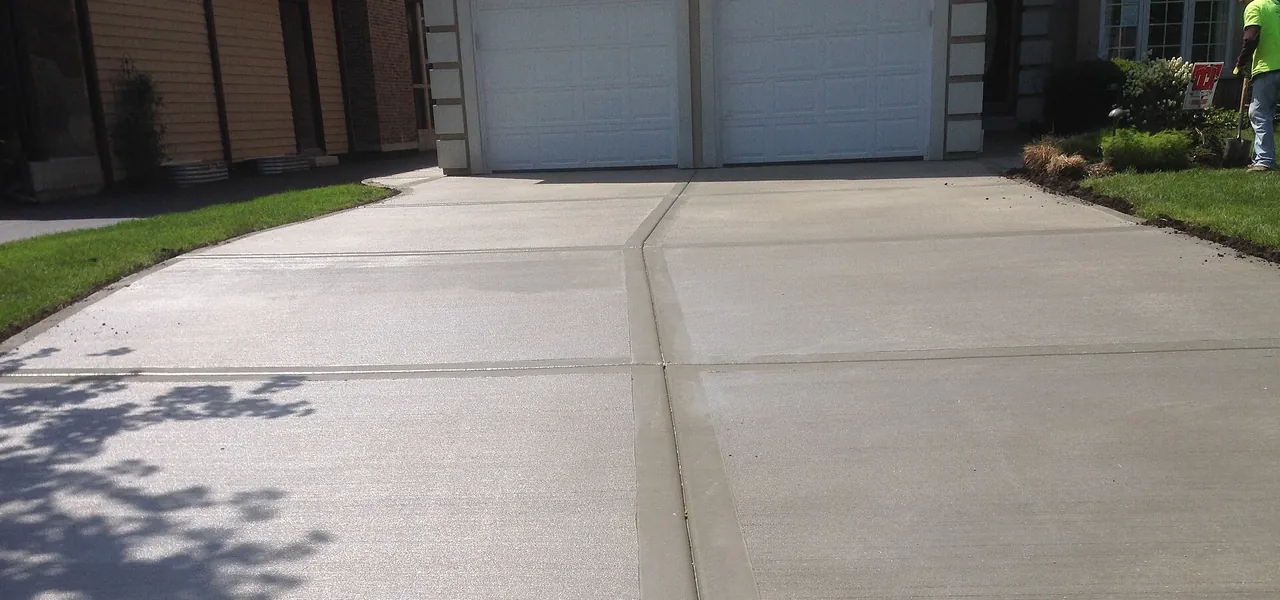
Project photos from concrete pros
Ready for a free quote?
Takes about a minute. No obligation.
Concrete guide
Concrete vs asphalt on one property
Asphalt shines for larger flexible pavements that are fast to place and straightforward to patch. Concrete provides a rigid slab preferred for dumpster pads, some aprons, sidewalks required by municipalities, and owners who want a concrete driveway look. Many sites use both, concrete at the sidewalk and trash enclosure, asphalt in the parking field.
Joints between materials need planned elevations. A concrete apron poured too high relative to new asphalt creates a lip; too low creates a pond. Coordinate contractors or hire a team comfortable with both scopes.
When concrete needs replacement
Replace slabs with severe cracking, settlement that creates trip hazards, spalling that exposes aggregate broadly, or heaved panels from roots or poor drainage. Grinding can address minor trip hazards in some cases; it is not a fix for failed base. Public sidewalks may involve permit and restoration rules, confirm before cutting.
Pour day essentials
Forms set grade and thickness. Base must be compacted. Reinforcement (if specified), placement, finishing, jointing, and curing determine longevity. Keep vehicles and dumpsters off until the contractor’s load time. Hot or cold weather changes curing practices, experienced crews adjust.
Working with asphalt timelines
Sequence matters. Sometimes concrete comes first so asphalt can tie into finished elevations; sometimes asphalt leads. Share one site plan with both trades. On Main Street, profiles may list concrete among services when that data exists in listings, never assume a paving-only company pours structural slabs unless listed or confirmed.
Concrete FAQs
How thick should a driveway slab be? Depends on soil and loads, ask for a site-specific recommendation.
Why control joints? They manage crack locations; skipping them invites random cracking.
Can asphalt patch abut concrete? Yes with proper edge detail and elevation match.
Sealing concrete? Different products than asphalt sealcoat; follow flatwork guidance.
Permits for sidewalk? Often yes in the public right-of-way, budget time for approvals.
Joints, drainage, and handoff to asphalt crews
Control joints should be cut or tooled at spacing appropriate to slab thickness and mix. Isolation joints belong where concrete meets buildings, drains, or existing slabs. Poor jointing shows up as random cracks that owners blame on “bad concrete” when layout was the issue.
Slope flatwork to drains; do not trap water against asphalt edges. Where a concrete apron meets an asphalt drive, the asphalt contractor should know final concrete elevation before paving, or leave a temporary ramp plan. Dumpster pads need thickness and reinforcement for point loads; underbuilding them cracks quickly.
If your Main Street shortlist is asphalt-first companies, ask explicitly whether concrete is in-house or subcontracted. Get one responsible party for final grades across both materials so you are not mediating a finger-pointing dispute after pour and pave.